
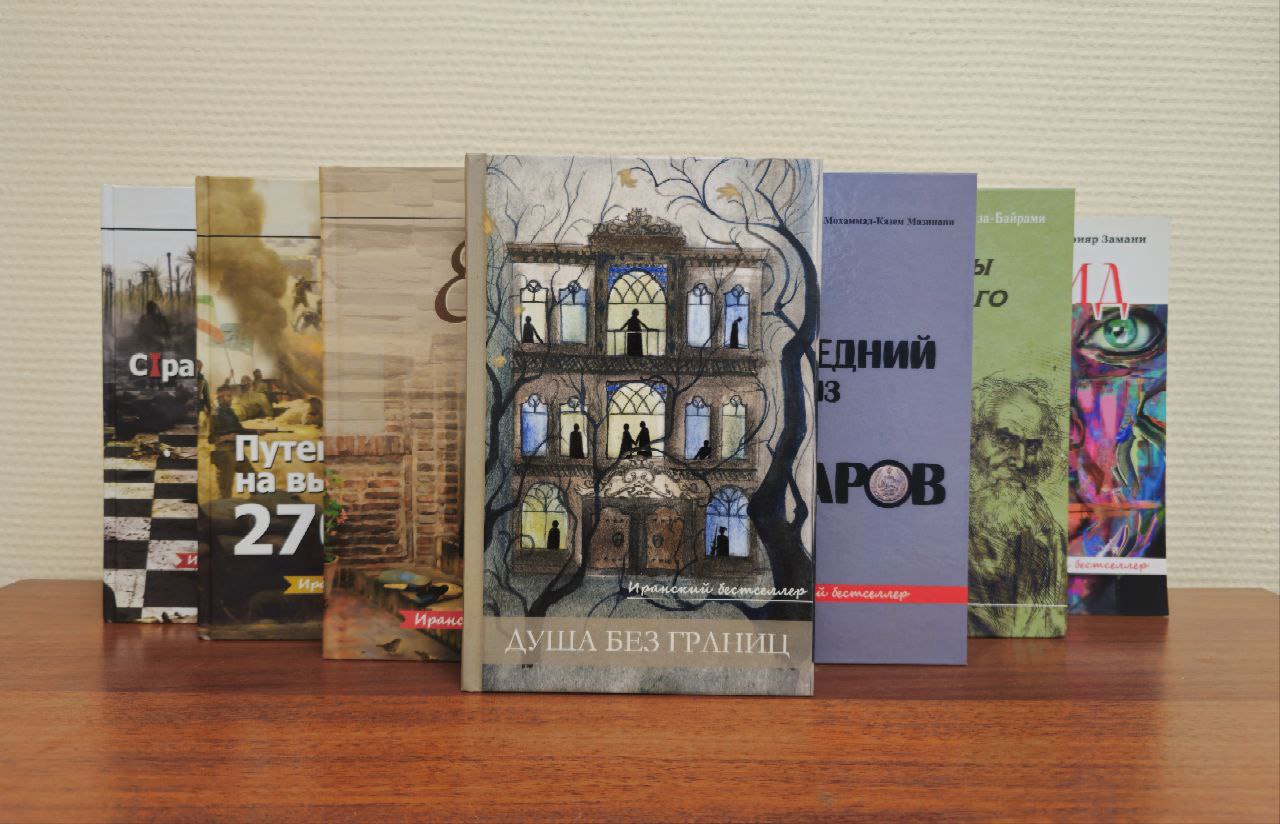
“Iranian Bestseller” is a series of books translated into Russian. It was created by “Sadra” Publishing House with the assistance of Ibn Sina Foundation in 2013.
This book series includes contemporary Iranian fiction: from tragic novels to social satire. These books have become true bestsellers in Iran and have gained popularity among many people. The books are dedicated to “eternal problems” that are topical for all countries and eras. It makes these books understandable for Russian readers.
Thus, in his novel “Her Me” Reza Amir-Khani focuses on a tragic love story, a love that lasts the lifetime.
The novel “The Last from Salars” by Mohammad Kazem Mazinani is dedicated to the destiny of the last son of this noble family whose members had relative ties with the shakh dynasty of Qajars. The events of the novel take place in two different eras.
The novel “Nahid” by Shahriyar Zamani contains almost detective story about aventures of a young girl who returns to Iran from emigration in 1979 for personal reasons and suddenly gets involved into revolutionary events.
The novels “Playing Chess with a Judgement Day Machine” by Habib Ahmad-zadeh and “A Journey to the Height 270” by Ahmad Dehqan are based on real events and are dedicated to heroic and tragic period in Iranian history when Iraq invaded the Islamic Republic (Iranian-Iraqi war, 1989-1988).
The book “Victims of the Coveted Garden” by Mohammad-Reza Bairami covers the destiny of the Azerbaijani Democratic Republic that used to exist on the territory of Iran in 1945-1946. In his attempt to find answers to some questions the author tells us the story of an escaped revolutionary’s orphan.
And finally, the collection of stories under the title of “Soul Without Limits” arranged by the thematic principles reflects spiritual and ideological search of the generation raised on the margins of traditions and changes. It includes personal dramas, war stories and metaphysical essays; the books also covers social controversies. The variety of literary views and styles, that are common for the contemporary Iranian culture, are presented in the book.